

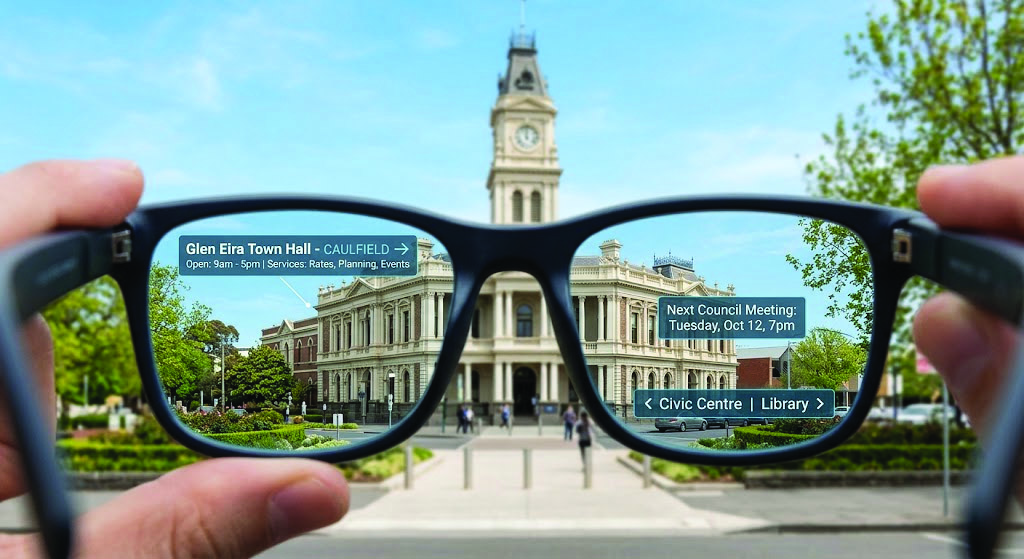
GLEN EIRA: Petition to ban smart glasses
Glen Eira parents and residents have launched a petition calling on Glen Eira City Council to prohibit smart glasses and other wearable recording devices in Council-managed facilities.
The group cites concerns about privacy, child safety and covert recording in public spaces.
The petition comes amid growing concerns that smart glasses can record video, images and audio discreetly, often without people nearby being aware that recording is taking place.
As the technology becomes more affordable and increasingly difficult to distinguish from ordinary eyewear, residents are raising concerns about privacy and safety in places used by children and families.
The Australian eSafety Commissioner has warned that image-based abuse and covert recording are increasing risks as new recording technologies become more widely available.
The petition asks Glen Eira Council to amend its Local Laws, conditions of entry and facility policies to prohibit smart glasses and other wearable devices with active recording capabilities in Council-owned or managed facilities.
This includes swimming pools, recreation centres, playgrounds, childcare services, libraries, community centres and other community gathering spaces. Exemptions would remain for people who rely on smart glasses as assistive technology due to disability-related needs.
Campaign organisers say the proposal is not about opposing innovation or accessibility, but ensuring privacy protections keep pace with emerging technologies.
“Families should be able to attend swimming lessons, visit playgrounds, use community facilities and participate in local activities without wondering whether they are being recorded without their knowledge or consent.
“The eSafety Commissioner has recognised that the risks associated with covert recording are already occurring, and councils have a responsibility to act now, before these technologies become commonplace and before privacy harms become normalised in community settings”, said Pauline Ryan, a Bentleigh East resident.
The campaign follows action taken by City of Yarra, which voted this month to prohibit smart glasses with built-in cameras in Council facilities including pools, gyms, playgrounds and childcare centres, while maintaining accessibility exemptions.
The decision established a clear Victorian precedent for local governments seeking to address privacy risks associated with wearable recording technologies.
Support for similar measures is also growing nationally. Matthew Thompson, a Councillor with City of Sydney, announced restrictions in council facilities, stating:
“That’s why we’re banning smart glasses and other wearable recording devices from all of our pools, gyms, childcares, libraries and other Council spaces.”
Organisers believe Glen Eira City Council now has an opportunity to follow established local government precedent and take a balanced approach that protects privacy while preserving access for people who depend on smart glasses as assistive technology.
They also acknowledge that local government action alone will not address the broader challenges posed by emerging wearable technologies.
“Local councils can take important steps to protect privacy within their facilities, but lasting protections will require action from Victorian and Federal Governments. “Emerging technologies are evolving faster than privacy laws, and communities deserve clear, consistent safeguards regardless of where they live,” Ms Ryan said.
Supporters hope the petition will demonstrate strong community backing for local action on wearable technologies.